

У вас есть прекрасная возможность найти высокодоходные перспективы для ИИ. Вы можете оценить как техническую осуществимость идеи, так и ее влияние на пользовательский опыт — две перспективы, которые должны быть объединены для успеха функций ИИ. Не следует создавать функции ИИ только потому, что они новые или впечатляющие, а потому, что они действительно упрощают, ускоряют или делают жизнь пользователей более приятной.
В этом модуле описывается структурированный итеративный метод для генерации идей, определения спецификаций и создания прототипов вариантов использования ИИ в вашем продукте.
Поймите ценность ИИ.
Представленная ниже схема возможностей ИИ определяет основные категории ценности, которую может обеспечить ИИ:
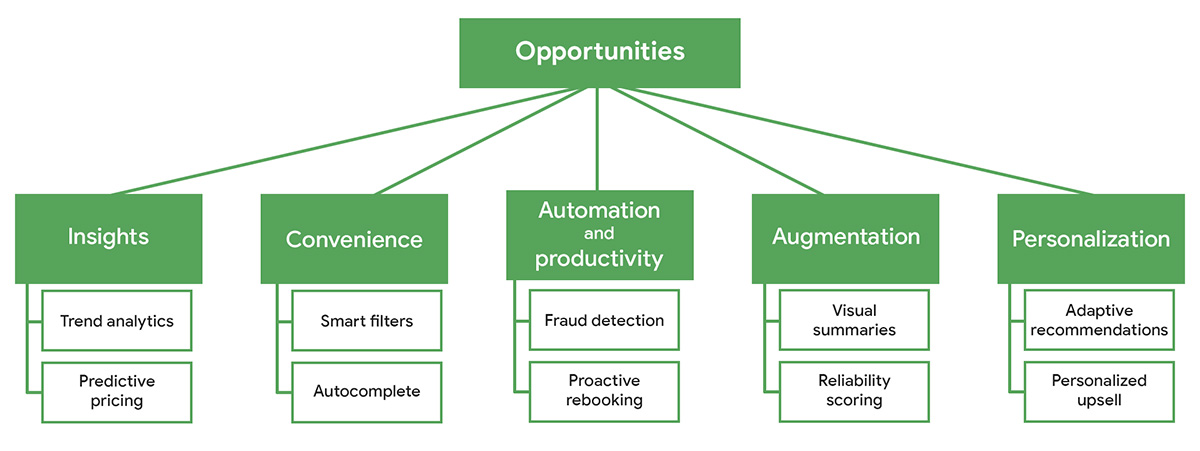
Мы перечислили категории ценности, чтобы помочь вам сформировать решения. По мере продвижения по этому списку сложность, риски и потенциальное влияние на пользователей, как правило, возрастают:
- Аналитические выводы : Улучшение процесса принятия решений.
- Удобство : Устранение трения.
- Автоматизация : замена повторяющейся работы.
- Расширение возможностей : Оказание помощи пользователям в выполнении сложных или творческих задач.
- Персонализация : адаптация продукта к индивидуальным потребностям и предпочтениям пользователя.
Сначала попробуйте решить задачи с меньшими затратами ресурсов. Например, получите более точные данные о продукте с помощью внутренней системы искусственного интеллекта, чтобы улучшить его изнутри. Затем проведите аудит существующих проблем в пользовательском интерфейсе и используйте ИИ для снижения трения и когнитивной нагрузки на пользователей. По мере накопления уверенности и опыта вы можете переходить к более сложным задачам и расширять использование ИИ.
Тем не менее, вы можете обнаружить возможности для значительного повышения эффективности, например, ненавязчивую персонализацию, которая на удивление доступна, не сопряжена с высоким риском и имеет большое значение.
Выявите возможности для развития вашего продукта.
Чтобы определить подходящую идею, вам необходимо хорошо понимать, кто ваши пользователи. Поработайте со своей UX-командой или изучите портреты пользователей, чтобы определить, кто эти пользователи. Примените подход, ориентированный на пользователя (или на людей) , и сопоставьте обнаруженные возможности ИИ с конкретными сценариями использования вашего продукта.
Это могут быть:
- В основе работы лежат четко определенные потребности или болевые точки пользователей.
- Предложено членами вашей команды или вами самими. В этом случае быстрая проверка с участием пользователей крайне важна, чтобы избежать ловушки «ИИ ради ИИ».
- Вдохновляйтесь конкурентами, но делайте это с осторожностью. Целевая аудитория и контекст ваших конкурентов могут отличаться от ваших. Проведите предварительную проверку, чтобы убедиться, что успешные инициативы конкурентов применимы к вашему продукту.
Например, в следующей таблице представлены идеи для веб-сайта по бронированию авиабилетов:
На каждом этапе взаимодействия пользователя с системой можно выявить различные возможности для повышения ценности с помощью ИИ.
Сформируйте своё решение
К этому моменту вы уже наметили несколько идей для ИИ на основе пользовательского пути. Следующий шаг — придать им форму и набраться достаточно уверенности, чтобы решить, какие из них следует разработать в первую очередь. Это командная работа, и обычно её инициирует менеджер по продукту. Как разработчик, ваша основная обязанность — оценить стоимость, трудозатраты и риски планируемого решения на основе ИИ.
Изложите свои идеи.
Для начала, кратко и целостно сформулируйте каждую идею. Вы можете использовать схему системы искусственного интеллекта из нашего введения. Как правило, разработчики сосредотачиваются на решении, а менеджер по продукту определяет возможности. Это упражнение дает всем общую основу для согласования и обсуждения перед тем, как двигаться дальше.
Оцените трудозатраты и стоимость.
Далее оцените сложность реализации вашей идеи. Например, добавление интеллектуальных фильтров может потребовать лишь анализа запросов с помощью API LLM, что позволяет быстро создать прототип и запустить его, а также упрощает настройку. В отличие от этого, для персонализированного помощника по бронированию потребуются пользовательские конвейеры обработки данных, API для бронирования и тщательно продуманные механизмы взаимодействия человека с системой, что представляет собой гораздо более сложную задачу.
Рассмотрите затраты усилий и средств по нескольким направлениям:
- Готовность данных : Есть ли у вас уже необходимые данные? Какой объем очистки, предварительной обработки или разметки необходимо выполнить, чтобы подготовить данные к использованию ИИ?
- Зрелость модели : Существует ли уже подходящая предварительно обученная модель, или вам необходимо обучить модель с нуля?
- Задержка : Насколько быстро должна реагировать модель, чтобы функция работала плавно и была полезной?
- Сложность интеграции : Сколько систем необходимо соединить? Используются ли бэкэнд, API, пользовательский интерфейс или сторонние инструменты? Чем больше точек взаимодействия, тем выше стоимость и риск.
- Эксплуатационные расходы : Насколько затратен каждый вызов модели или вывод результатов? Оцените ежемесячное использование и заложите в бюджет средства на масштабирование. Функция, которая «дешева» на этапе прототипа, может стать дорогостоящей после запуска тысячами пользователей.
Учитывайте скрытые издержки для пользователя. Искусственный интеллект может вносить неопределенность и приводить к частым ошибкам в ваш продукт. При использовании ИИ на стороне клиента функции выполняются на устройстве пользователя, что потребляет пропускную способность, память и энергию. Функция должна быть достаточно ценной, чтобы пользователи были готовы платить за нее.
Оценивая трудозатраты на ранних этапах, вы можете сосредоточиться на высокоэффективных и не требующих больших усилий результатах, откладывая более сложные идеи до тех пор, пока не созреют ваши данные, инфраструктура и опыт.
Оцените виды отказов
Иногда модель допускает ошибки, и функции не работают должным образом. Вам необходимо сообщить пользователям, что происходит и где произошла ошибка, чтобы они знали, могут ли они изменить свои входные данные для получения желаемого результата.
Например, предположим, вы управляете туристическим агентством. Ваша компания хочет предлагать путешественникам персонализированные рекомендации. Ваши пользователи запросили инструмент для самостоятельной персонализации, и ваша команда разработчиков настаивает на его внедрении. Однако вы знаете, что для персонализации требуется множество сигналов от пользователей об их интересах, и у вас нет базы данных, которая собирает такие сигналы. Это приводит к неудачной персонализации, предлагающей нерелевантные рекомендации, что приводит к отказу пользователей от этой функции. Ваше понимание доступности персонализированных данных должно было повлиять на оценку ценности этой функции вашей командой.
Вот еще несколько критических сбоев в работе ИИ, которые следует учитывать:
- Галлюцинация : Модель генерирует результаты, которые кажутся правдоподобными, но не являются реальными (например, выдумывает несуществующий рейс).
- Предвзятость : Модель демонстрирует или усиливает несправедливые обобщения на основе обучающих данных, что приводит к дискриминационным или неравноправным результатам. Например, модель может предполагать, что одни пользователи хотят летать первым классом, а другие — эконом-классом, исходя из их предполагаемого пола или расы.
- Проблема «холодного старта» : система не может приносить пользу новым пользователям или товарам из-за отсутствия исходных данных, как показано в примере с персонализированным инструментом для путешествий.
- Снижение производительности : точность модели со временем снижается по мере того, как реальные данные изменяются и отклоняются от исходного распределения, что также известно как дрейф модели.
Прототип
Ваши первоначальные данные о стоимости, трудозатратах и режимах отказов будут иметь низкую точность. Для повышения уверенности в эффективности конкретной функции ИИ лучшим способом проверки является создание прототипа. Прототипирование позволяет быстро проверить основные технические предположения (готовность данных, задержка, точность) перед тем, как приступить к полноценной разработке. Особенно с новой, еще не до конца изученной технологией, такой как ИИ, обучение происходит быстрее в процессе разработки, чем в процессе исследований и анализа.
С помощью инструментов генерации кода на основе искусственного интеллекта, таких как Vertex AI и Replit, вы можете значительно ускорить процесс прототипирования и снизить риски.
Придерживайтесь такого подхода: выпустите небольшой продукт, понаблюдайте за его поведением и постоянно совершенствуйте его.
Примените следующие передовые методы:
- Начинайте разработку с нуля на ранних этапах . Протестируйте весь процесс, определенный в вашем плане системы ИИ (данные, интеллект, пользовательский опыт), а не только точность модели. Эта разработка должна отражать все аспекты взаимодействия пользователя с ИИ, но не обязательно представлять все функции приложения.
- Начните с простых способов . Используйте API и предварительно обученные модели для быстрой проверки ценности.
- Регистрируйте всё . Отслеживайте входные и выходные данные, а также изменения, вносимые пользователем, чтобы выявить распространённые причины сбоев и оценить потенциальные препятствия.
- Тестируйте на реальных данных . Первые тесты должны фиксировать естественное, нестандартное поведение пользователей.
- Добавьте механизмы обратной связи и контроля . Упростите пользователям возможность отмечать ошибки или корректировать результаты, а также дайте им возможность подтверждать или исправлять результаты.
В большинстве случаев создание прототипов происходит параллельно с вашей работой по оценке и определению технических характеристик .
Ваши выводы
Вы научились превращать абстрактный потенциал ИИ в конкретные, высокоэффективные идеи для продуктов. Как разработчик, ваше преимущество заключается в умении связывать техническую осуществимость с пользовательским опытом. Вы изучили, как ИИ может создавать ценность в различных категориях, сопоставили эти возможности с пользовательским путем вашего продукта и научились определять, оценивать и расставлять приоритеты с помощью структурированных подходов.
Помните, что успех ИИ достигается благодаря неустанным итерациям. Выпускайте продукты на ранних этапах, прислушивайтесь к пользователям и наблюдайте за ними, а также быстро совершенствуйте их. Каждый прототип — это шаг к пониманию того, как ИИ может повысить ценность и удовлетворенность вашим продуктом.
Ресурсы
- «Правильное определение потребностей в ИИ» — руководство по разработке, проверке и приоритизации сценариев использования ИИ.
- AI Radar — инструмент для поиска и принятия решений, позволяющий выявлять и расставлять приоритеты в различных отраслях.
Проверьте свое понимание
К какой категории возможностей ИИ относится помощь пользователям в решении сложных или творческих задач?
Что подразумевается под "сложностью интеграции" при оценке трудозатрат и стоимости идеи в области искусственного интеллекта?
В чём заключается проблема «холодного старта» в контексте сбоев в работе ИИ?
Какой подход рекомендуется использовать при прототипировании функций искусственного интеллекта?
Почему важно вести журнал при создании прототипов?