

एआई की मदद से डेवलपमेंट करते समय, मॉडल चुनने, इन्फ़्रास्ट्रक्चर, और कोड में उलझा जा सकता है. ऐसा हो सकता है कि आप असली मुद्दे से भटक जाएं.
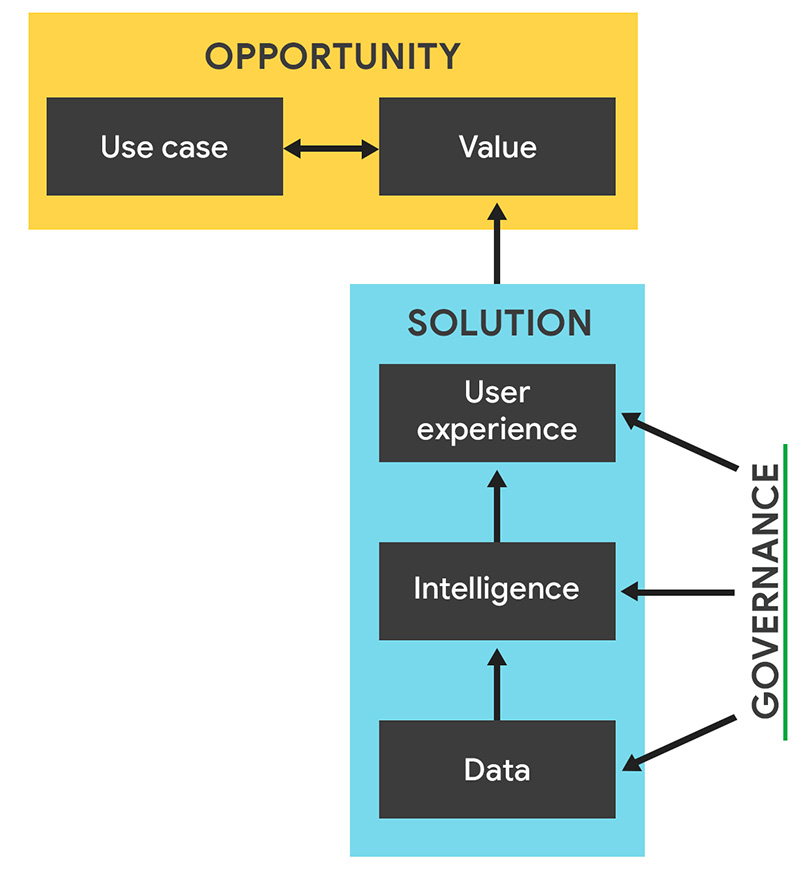
इस मॉड्यूल में, हम एक ब्लूप्रिंट पेश कर रहे हैं. इसका इस्तेमाल करके, किसी भी नई एआई सुविधा या प्रॉडक्ट को मैप किया जा सकता है:
- आपको क्या बनाना है? एआई के इस्तेमाल से जुड़े आपके मामले से, लोगों को क्या फ़ायदा मिलता है?
- आपका आवेदन कैसे काम करेगा?
- यह कैसे पक्का किया जा सकता है कि आपके सिस्टम का हर हिस्सा ज़िम्मेदारी के साथ बनाया गया है?
इस ब्लूप्रिंट के काम करने का तरीका समझने के लिए, मान लें कि आप Example Shoppe नाम की ई-कॉमर्स साइट पर काम करते हैं. आपके प्रतिस्पर्धी, सामान्य चैटबॉट को अपने कारोबार में शामिल करने में लगे हैं, लेकिन उन्हें इससे ज़्यादा फ़ायदा नहीं मिला है. आपको अपने उपयोगकर्ताओं को बेहतर अनुभव देना है. इसलिए, आपने मुख्य उपयोगकर्ता फ़्लो में रुकावट डाले बिना, खोज के अनुभव को बेहतर बनाने का फ़ैसला किया है.
एआई की मदद से अपग्रेड की गई इस सुविधा के ज़रिए, खरीदार सामान्य भाषा में वाक्यांश टाइप कर सकते हैं. जैसे, "सर्दियों के लिए लाल रंग के ट्रेल रनर". इससे उन्हें ऐसे काम के नतीजे मिल सकते हैं जो उन्हें कीवर्ड-आधारित खोज से नहीं मिलते.
अवसर
हर एआई प्रोजेक्ट की शुरुआत, इस्तेमाल के एक साफ़ तौर पर बताए गए उदाहरण से होनी चाहिए. यह उदाहरण, उपयोगकर्ता के किसी काम या समस्या से जुड़ा होना चाहिए. साथ ही, यह ऐसा होना चाहिए जिसे एआई की मदद से हल किया जा सकता हो. एआई की वजह से, आपके ऐप्लिकेशन में अनिश्चितता और अन्य जोखिम आ सकते हैं. इसलिए, आपको इसका इस्तेमाल सिर्फ़ तब करना चाहिए, जब समस्या को सामान्य, डिटरमिनिस्टिक तरीके से हल न किया जा सके.
इस्तेमाल का उदाहरण
Example Shoppe के लिए, खोज एक मुख्य फ़ंक्शन है. यह उपयोगकर्ताओं को उन प्रॉडक्ट से जोड़ता है जिन्हें वे खोज रहे हैं. उपयोगकर्ता अक्सर टाइपिंग की गलतियों, समानार्थी शब्दों या अस्पष्ट क्वेरी की वजह से खोज छोड़ देते हैं. आपको यह जानकारी अपने Analytics से मिलती है. हालांकि, यह जानकारी बाहरी रिसर्च से भी मिलती है. ज़्यादा बेहतर और स्मार्ट सर्च की मदद से, उपयोगकर्ताओं के अनुभव को ज़्यादा असरदार और शानदार बनाया जा सकता है.
एआई के इस्तेमाल के अन्य उदाहरणों में ये शामिल हैं:
- किसी न्यूज़ साइट पर, खबरों को क्रम से व्यवस्थित करके, लोगों को आसानी से जानकारी दी जा सकती है.
- पब्लिशिंग प्लैटफ़ॉर्म पर, वैकल्पिक टेक्स्ट और कैप्शन के अपने-आप सुझाव पाने की सुविधा का इस्तेमाल करके, सुलभता को बेहतर बनाया जा सकता है.
- क्लाउड सेवा देने वाली कंपनी के तौर पर, बेहतर दस्तावेज़ खोज की सुविधा का इस्तेमाल करके, सहायता के लिए किए गए अनुरोधों की संख्या कम की जा सकती है.
एआई की मदद से कारोबार को आगे बढ़ाने के लिए, ज़्यादा फ़ायदे वाले अवसरों का पता लगाना ज़रूरी है. RAND Corporation की रिपोर्ट के मुताबिक, एआई प्रोजेक्ट के फ़ेल होने की मुख्य वजहों में से एक यह है कि सही अवसर नहीं चुना जाता.
मान
वैल्यू के दो पहलू होते हैं: उपयोगकर्ताओं को मिलने वाले फ़ायदे और प्रॉडक्ट या कारोबार को मिलने वाले फ़ायदे. ज़्यादातर भरोसेमंद और ज़िम्मेदारी के साथ बनाए गए प्रॉडक्ट में, ये दोनों चीज़ें एक साथ काम करती हैं: जब उपयोगकर्ता को फ़ायदा मिलता है, तब कारोबार भी बढ़ता है. उदाहरण के लिए, Shoppe में एआई की मदद से बेहतर की गई खोज की सुविधा, लोगों को कम समय में और आसानी से सही प्रॉडक्ट ढूंढने में मदद करती है. इससे प्रॉडक्ट की खोज, कन्वर्ज़न रेट, और लंबे समय तक ग्राहक संतुष्टि बढ़ती है.
कभी-कभी, वैल्यू को मापा नहीं जा सकता. जैसे, उपयोगकर्ता का भरोसा और संतुष्टि. खास तौर पर, शुरुआत में वैल्यू प्रपोज़िशन को मेज़र करने का तरीका ढूंढना सबसे अच्छा होता है. इससे आपको प्राथमिकता तय करने, असर के बारे में बताने, और हितधारकों को सहमत कराने के लिए एक ठोस आधार मिलता है. अनुमानित डेटा से भी फ़ैसले लेने में मदद मिलती है और सफलता को मापा जा सकता है.
समाधान
अपने प्रॉडक्ट में एआई को शामिल करने की वजह बताने के बाद, सोचें कि इसे कैसे लागू किया जाएगा. एआई समाधान के मुख्य बिल्डिंग ब्लॉक देखें.
Data
डेटा, एआई के लिए ईंधन की तरह होता है. आखिरकार, आपका एआई सिस्टम इस बात पर निर्भर करता है कि वह आपके डेटा से कितनी अच्छी तरह सीख सकता है. डेटा खराब होने, अधूरा होने या गलत तरीके से अलाइन होने पर, नतीजे सही नहीं मिलते. साथ ही, उपयोगकर्ताओं को परेशानी होती है. इससे कोई फ़र्क़ नहीं पड़ता कि मॉडल या इन्फ़्रास्ट्रक्चर कितना भी बेहतर हो. इसके उलट, अच्छी क्वालिटी का डेटा और बेहतरीन तरीके से डिज़ाइन किया गया डेटा फ़्लायव्हील, वैल्यू बढ़ाने वाले ड्राइवर होते हैं. ये आपके प्रॉडक्ट को अलग पहचान देने में भी मदद कर सकते हैं.
डेटा अलग-अलग फ़ॉर्मैट और मोड में उपलब्ध होता है. एआई की मदद से काम करने वाली खोज के उदाहरण के लिए, काम के डेटा में यह जानकारी शामिल हो सकती है:
- स्ट्रक्चर्ड डेटा: प्रॉडक्ट के टाइटल, रंग, साइज़, कैटगरी, और उपलब्धता.
- अनस्ट्रक्चर्ड डेटा: प्रॉडक्ट के ब्यौरे, उपयोगकर्ता की समीक्षाएं, और अक्सर पूछे जाने वाले सवाल.
- समानार्थी शब्दों की सूचियां: शब्दों के बीच संबंध, जैसे कि "स्नीकर" का मतलब "दौड़ने के लिए जूते" होता है.
- उपयोगकर्ता के सिग्नल: क्लिक, ठहरने का समय, कार्ट में जोड़ने की कार्रवाइयां, और खरीदारी, ये सभी ऐसे सिग्नल हैं जिनसे मॉडल को यह समझने में मदद मिलती है कि उपयोगकर्ताओं को कौनसे प्रॉडक्ट काम के लगते हैं.
- विज़ुअल डेटा: प्रॉडक्ट की ऐसी इमेज जिन्हें विज़ुअल समानता इंडेक्स में एम्बेड किया जा सकता है. इससे लोग, फ़ोटो के हिसाब से खोज कर सकते हैं या मिलते-जुलते आइटम ढूंढ सकते हैं. भले ही, टेक्स्ट मैच न हो.
आपको लग सकता है कि यह बहुत ज़्यादा डेटा है, लेकिन चिंता न करें. शुरुआत में, कम डेटा सोर्स का इस्तेमाल करें. ऐसे डेटा सोर्स का इस्तेमाल करें जिनसे सिग्नल-टू-नॉइज़ रेशियो सबसे ज़्यादा मिलता है. इसके बाद, जैसे-जैसे आपका सिस्टम बेहतर होता जाए वैसे-वैसे डेटा सोर्स की संख्या बढ़ाएं.
ज़्यादातर मामलों में, आपका रॉ डेटा किसी मॉडल के इस्तेमाल के लिए तैयार नहीं होता. इसे साफ़ करने, पहले से प्रोसेस करने, और एआई के हिसाब से फ़ॉर्मैट में व्यवस्थित करने की ज़रूरत होती है. उदाहरण के लिए, उपयोगकर्ता के सिग्नल को ऐक्शन सीक्वेंस में बदला जा सकता है. वहीं, बिना किसी स्ट्रक्चर वाले प्रॉडक्ट के ब्यौरे को सिमैंटिक एम्बेडिंग के तौर पर कोड में बदला जा सकता है.
एआई के लाइफ़साइकल के अलग-अलग चरणों में डेटा का इस्तेमाल किया जा सकता है:
- ट्रेनिंग या फ़ाइन-ट्यूनिंग के दौरान, इसका इस्तेमाल मॉडल को पैटर्न और संबंधों के बारे में सिखाने के लिए किया जाता है.
- आकलन के दौरान, इसका इस्तेमाल क्वालिटी, सटीकता, और काम की जानकारी की जांच करने के लिए किया जा सकता है.
- प्रोडक्शन में, इसका इस्तेमाल ड्रिफ्ट को ट्रैक करने और असल दुनिया में इस्तेमाल से जुड़े सुझाव पाने के लिए किया जा सकता है.
संक्षेप में कहें, तो डेटा सिर्फ़ एक इनपुट नहीं है, बल्कि एक अहम संसाधन है. एआई के साथ काम करते समय, वेब डेवलपर के लिए डेटा को अच्छी तरह से मैनेज करना सबसे अहम कौशल में से एक है.
इंटेलिजेंस
इंटेलिजेंस लेयर में, एआई डेटा को प्रोसेस करके अहम जानकारी जनरेट करता है. अक्सर, इसके मूल में एक मॉडल होता है, लेकिन ज़्यादातर सिस्टम ज़्यादा जटिल होते हैं. उदाहरण के लिए, Shoppe के लिए इंटेलिजेंस लेयर, कई तरीकों का इस्तेमाल करके उपयोगकर्ता की क्वेरी को समझती है:
color=redयाseason=winterजैसे एट्रिब्यूट निकालने के लिए, नाम वाली इकाई की पहचान और जानकारी निकालने की सुविधा का इस्तेमाल किया जाता है.- सेंटेंस एम्बेडिंग मॉडल, जो उपयोगकर्ता की क्वेरी और उपलब्ध प्रॉडक्ट के सिमैंटिक रिप्रेजेंटेशन बनाता है.
- सिमैंटिक सर्च की मदद से, काम के नतीजे पाना.
- नतीजों को सटीक तरीके से रैंक करने के लिए, छोटा और ज़रूरत के मुताबिक बनाया गया फिर से रैंक करने वाला मॉडल.
एआई सिस्टम का सबसे दिलचस्प हिस्सा, उसकी इंटेलिजेंस होती है. हालांकि, यह सबसे ज़्यादा चर्चा में रहने वाला कॉम्पोनेंट भी है. हर हफ़्ते नए मॉडल लॉन्च होते हैं. अक्सर, इनके बारे में मार्केटिंग के बड़े-बड़े दावे किए जाते हैं.
यहां दो मुख्य बातों का ध्यान रखना ज़रूरी है:
- एआई, सिर्फ़ जनरेटिव एआई और लार्ज लैंग्वेज मॉडल (एलएलएम) तक सीमित नहीं है. कई कामों के लिए, छोटे और खास मॉडल बेहतर होते हैं. इन्हें डिप्लॉय करना और मैनेज करना आसान होता है. साथ ही, ये तेज़ी से काम करते हैं और इनकी लागत भी कम होती है.
- असल ज़िंदगी में, एआई सिस्टम शायद ही कभी किसी एक मोनोलिथिक मॉडल पर निर्भर होते हैं. इसके बजाय, ये कंपाउंड एआई आर्किटेक्चर का इस्तेमाल करते हैं. ये एक या एक से ज़्यादा मॉडल के साथ-साथ डेटाबेस, एपीआई, और गार्डरेल जैसे अतिरिक्त कॉम्पोनेंट के कॉम्बिनेशन होते हैं. ये दोनों मिलकर, कॉन्टेक्स्ट के हिसाब से काम करने वाली बेहतर सुविधाएँ उपलब्ध कराते हैं.
लीडरबोर्ड पर सबसे ऊपर मौजूद एआई को चुनने के बजाय, ऐसा एआई चुनें जो आपकी समस्या के हिसाब से सही हो. इससे आपको अपने प्रॉडक्ट और कारोबार में बदलाव करने में मदद मिलेगी. आने वाले मॉड्यूल में, आपको एआई की सबसे आम तकनीकों के बारे में बुनियादी जानकारी मिलेगी. जैसे, अनुमान लगाने वाले एआई और जनरेटिव एआई. साथ ही, आपको अपने सिस्टम के लिए सही तकनीकी तरीका चुनने और उसका आकलन करने के बारे में भी जानकारी मिलेगी.
उपयोगकर्ता अनुभव
यूज़र इंटरफ़ेस, ऐसा चैनल है जो आपके उपयोगकर्ताओं को एआई की वैल्यू देता है. डिटरमिनिस्टिक सॉफ़्टवेयर इंटरफ़ेस, भरोसेमंद और अनुमान लगाने लायक होते हैं: एक ही इनपुट से हमेशा एक जैसा आउटपुट मिलता है. एआई का इस्तेमाल करने से, अनिश्चितता पैदा होती है. लगभग एक जैसी दो क्वेरी के नतीजे पूरी तरह से अलग हो सकते हैं. साथ ही, सबसे शक्तिशाली एआई मॉडल भी गलत जानकारी दे सकते हैं और अन्य तरह की गलतियां कर सकते हैं.
आपको इस बदलाव के बारे में बहुत सोच-समझकर फ़ैसला लेना होगा. खास तौर पर, अगर आपको किसी मौजूदा प्रॉडक्ट में एआई को जोड़ना है. ओपन-एंडेड चैटबॉट मज़ेदार होते हैं, लेकिन इनका इस्तेमाल करना मुश्किल और जोखिम भरा होता है.
शुरुआत में, उपयोगकर्ताओं को होने वाली अनिश्चितता और जोखिम को कम करने का लक्ष्य रखें. उदाहरण के लिए, Example Shoppe के मामले में, एआई की मदद से काम करने वाली खोज सुविधा को मौजूदा इंटरफ़ेस में आसानी से इंटिग्रेट किया जा सकता है. लोग, सामान्य भाषा में क्वेरी टाइप करते रहते हैं और उन्हें खोज के बेहतर नतीजे मिलते हैं.
एआई की सुविधा बैकग्राउंड में काम करती है. हालांकि, पारदर्शिता बनाए रखने के लिए, यह ज़रूरी है कि आप इस बात की जानकारी दें. उदाहरण के लिए, एक सूचना जोड़ी जा सकती है. साथ ही, यह बताया जा सकता है कि सिस्टम इन नतीजों को कैसे इकट्ठा करता है.
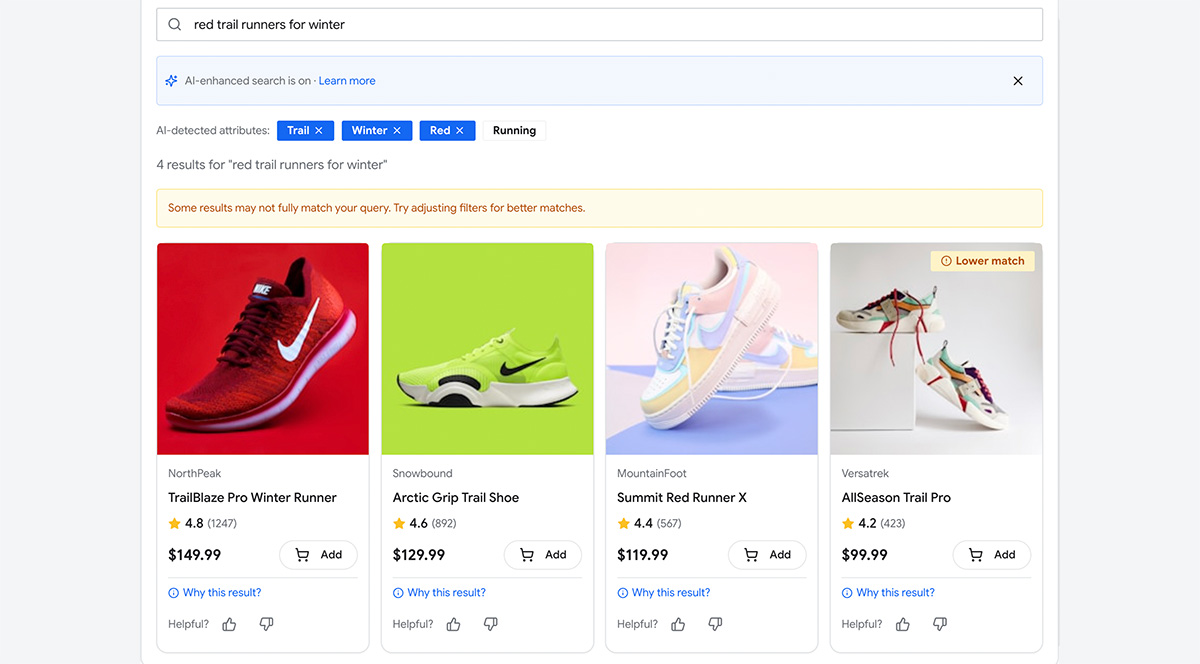
UX पैटर्न में, आपको यह जानने को मिलता है कि अपने प्रॉडक्ट के यूज़र एक्सपीरियंस में, एआई के इस्तेमाल, उसकी क्षमताओं, और जोखिम के बीच संतुलन कैसे बनाया जाए.
मैनेज करना
एआई सिस्टम को ज़िम्मेदारी के साथ बनाया जाना चाहिए. आपको ऐसा सिस्टम बनाना चाहिए जो उपयोगकर्ता की निजता की सुरक्षा करता हो, पूर्वाग्रह को कम करता हो, पारदर्शिता बनाए रखता हो, और सभी ज़रूरी कानूनी मानकों को पूरा करता हो. बेहतर गवर्नेंस सिर्फ़ नियमों का पालन करने के लिए नहीं है. यह डिज़ाइन का एक बुनियादी सिद्धांत है. इससे उपयोगकर्ताओं का भरोसा जीता जा सकता है और उन्हें अपने साथ जोड़ा जा सकता है.
उदाहरण के लिए, Example Shoppe की एआई की मदद से काम करने वाली खोज सुविधा में, गवर्नेंस की शुरुआत प्रॉडक्ट में शामिल सुरक्षा उपायों से होती है:
- निजता: मनमुताबिक बनाने के लिए इस्तेमाल किया जाने वाला डेटा, डिवाइस पर ही सेव रहता है. हालांकि, अगर उपयोगकर्ता साफ़ तौर पर सहमति देते हैं, तो इसे शेयर किया जा सकता है. इसे किसी भी समय चालू या बंद किया जा सकता है.
- निष्पक्षता: खोज के नतीजों की ऑडिट की जाती है, ताकि यह पक्का किया जा सके कि सभी सेलर को बराबर का एक्सपोज़र मिले.
- भरोसा और पारदर्शिता: Example Shoppe से यह जानने में मदद मिलती है कि किसी खोज क्वेरी के नतीजे में सबसे ऊपर कोई जवाब क्यों दिखाया गया. इससे लोगों का भरोसा जीतने का मौका मिलता है.
- सुरक्षा: गार्डरेल की मदद से, प्रतिबंधित या असुरक्षित क्वेरी (उदाहरण के लिए, प्रतिबंधित आइटम) को फ़िल्टर या ब्लॉक किया जाता है.
- शिकायत करने का तरीका: अगर एआई की मदद से खोज को बेहतर बनाने वाली सुविधाएं काम की नहीं हैं, तो उपयोगकर्ता एआई के सुझावों को तुरंत खारिज कर सकते हैं. साथ ही, एआई के खराब नतीजों या इंटरैक्शन की शिकायत कर सकते हैं. इसके अलावा, वे सिर्फ़ कीवर्ड की मदद से खोज करने की सुविधा पर वापस जा सकते हैं.
एआई को ज़िम्मेदारी के साथ बनाने के लिए, आपको डिप्लॉयमेंट की प्रोसेस का मालिकाना हक लेना होगा. सोच-समझकर सुरक्षा से जुड़ी गाइडलाइन और फ़ीडबैक लूप डिज़ाइन करें. आपके पास यह तय करने का विकल्प होता है कि इस सुविधा का इस्तेमाल सुरक्षित और भरोसेमंद तरीके से किया जाए. साथ ही, यह भी तय किया जा सकता है कि इसका इस्तेमाल किस तरह और कितनी बार किया जा सकता है. हालांकि, आउटपुट को पूरी तरह से कंट्रोल नहीं किया जा सकता. इसलिए, आपको किसी भी समस्या को हल करने के लिए तैयार रहना चाहिए.
आपको ज़िम्मेदारी से एआई का इस्तेमाल करना में, एआई के इस्तेमाल से जुड़े मुख्य पहलुओं के बारे में ज़्यादा जानकारी मिलती है. इससे आपको ऐसे व्यावहारिक टूल मिलते हैं जिनकी मदद से, भरोसेमंद और लंबे समय तक काम करने वाले एआई ऐप्लिकेशन बनाए जा सकते हैं.
आपके लिए अहम जानकारी
एआई सिस्टम के ब्लूप्रिंट से, आपको किसी भी एआई प्रोजेक्ट के बारे में साफ़ तौर पर जानकारी मिल सकती है. साथ ही, आपको यह भी पता चल सकता है कि आपको उस प्रोजेक्ट में क्या-क्या करना है. हमने इस ब्लूप्रिंट के हर एलिमेंट के बारे में खास जानकारी दी है. आगे पढ़ने पर, आपको हर चरण के बारे में ज़्यादा जानकारी मिलेगी.
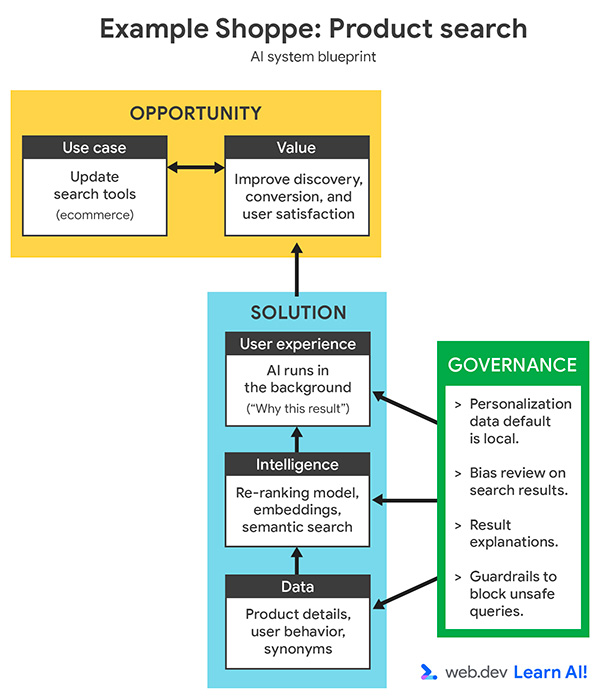
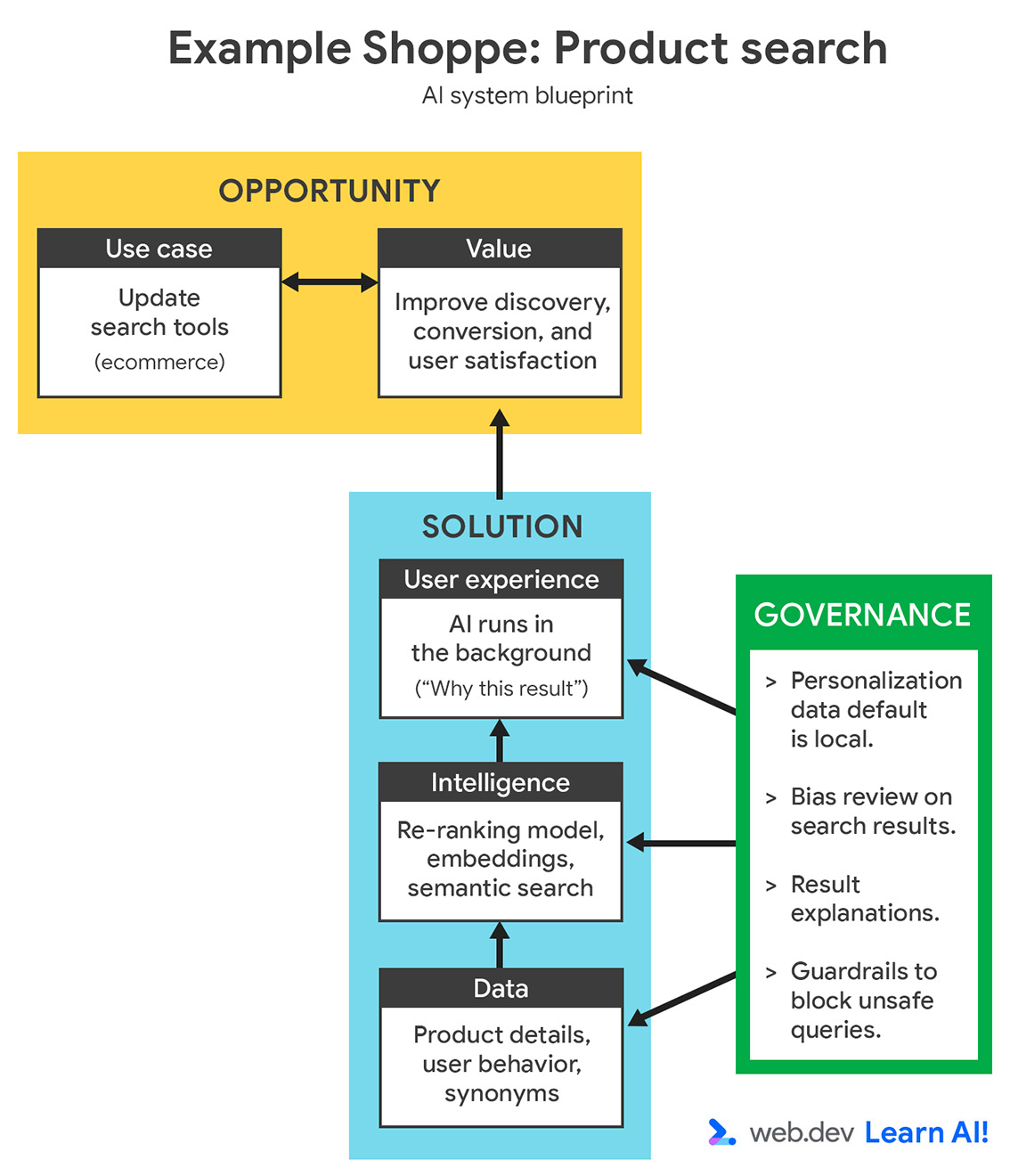
आपको अलग-अलग उदाहरणों के लिए, यह ब्लूप्रिंट फिर से दिख सकता है. इसमें कुछ लेयर के बारे में ज़्यादा जानकारी दी गई होगी.
देखें कि आपको कितना समझ आया
एआई सिस्टम के ब्लूप्रिंट के मुताबिक, एआई की नई सुविधा को मैप करते समय, किन तीन मुख्य पहलुओं पर ध्यान देना चाहिए?
किसी समस्या को हल करने के लिए, एआई का इस्तेमाल कब करना चाहिए?
एआई के उपयोगकर्ता अनुभव में "क्वाइट इंटिग्रेशन" के बारे में इनमें से कौनसी बात सही है?
उपयोगकर्ताओं का भरोसा जीतने के लिए, डिज़ाइन का मुख्य सिद्धांत क्या है?